Cancer doesn't wait — and neither does the global healthcare system responding to it. As diagnosis rates climb across Asia and beyond, a quiet revolution in biopsy technology is reshaping how cancers are caught earlier, treated more precisely, and — increasingly — managed across borders by patients who want the best possible care at a price that makes sense.
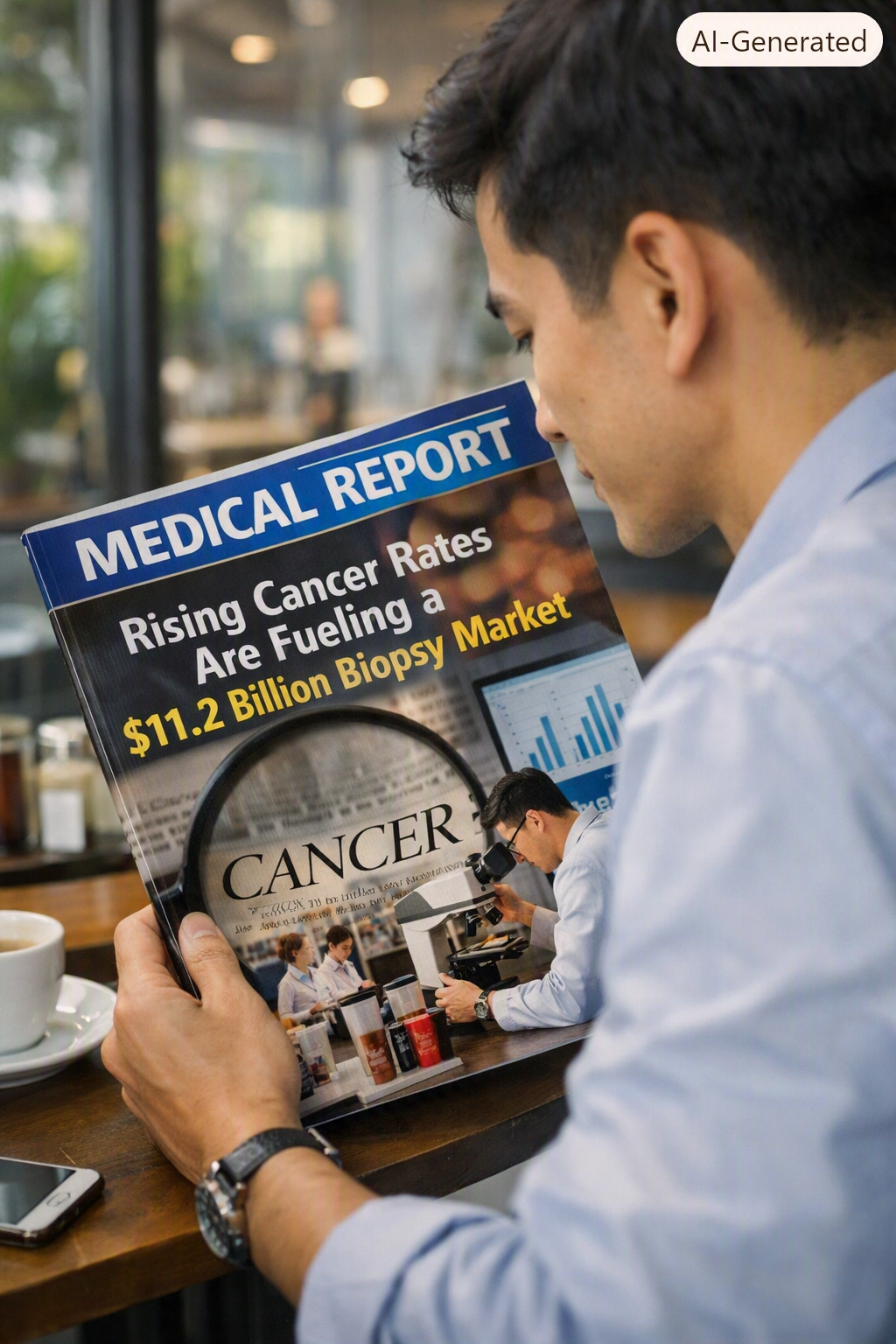
According to a recent report covered by Healthcare Asia Magazine, rising cancer rates are pushing the global biopsy market toward a staggering $11.2 billion. For international patients navigating a cancer diagnosis, understanding this market shift isn't just interesting — it's actionable intelligence that could directly influence where, how, and how affordably they receive care.
What Is Driving the Biopsy Market Boom?
The global biopsy market is expanding at a compound annual growth rate (CAGR) of approximately 7–9%, fueled by a convergence of factors that show no signs of slowing. Chief among them is the sheer rise in cancer incidence worldwide. The World Health Organization estimates that global cancer cases will reach 35 million per year by 2050, up from around 20 million in 2022 — a nearly 75% increase in under three decades.
Several key drivers are accelerating this market growth:
Aging populations across Asia-Pacific, Europe, and North America, where age is the single greatest cancer risk factor
Lifestyle-related cancers — including colorectal, breast, and lung cancers — rising due to urbanization and dietary shifts
Increased cancer screening awareness and national screening programs expanding access to diagnostic services
Technological innovation in biopsy tools, including liquid biopsy, robotic-guided needle biopsy, and AI-assisted pathology
Shorter turnaround times and more accurate results reducing the need for repeat procedures
The Technology Shift: From Surgical to Liquid Biopsy
Not all biopsies are created equal, and the market's growth is being disproportionately driven by next-generation diagnostic methods. Traditionally, biopsy meant a surgeon extracting tissue under anesthesia — an invasive procedure with recovery time and associated costs. Today, the fastest-growing segment is liquid biopsy, a blood-based test that detects circulating tumor DNA (ctDNA), cancer cells, or other biomarkers in a simple blood draw.
Liquid biopsies can cost anywhere from $500 to $5,000 USD depending on the panel and the country — yet they offer significant advantages: no anesthesia, no incision, faster results, and the ability to monitor treatment response over time. Leading hospitals in South Korea, Taiwan, and China have been early adopters of liquid biopsy platforms, making these destinations increasingly attractive to international patients seeking cutting-edge diagnostics outside their home countries.
Other growth areas include:
Vacuum-assisted biopsy (VAB) for breast lesions — widely available in Malaysia and Thailand
Endoscopic ultrasound-guided biopsy (EUS-FNA) for gastrointestinal and pancreatic cancers
CT-guided core needle biopsy for lung and liver lesions
AI-enhanced digital pathology, accelerating diagnosis accuracy and reducing human error
Why This Matters Now for International Patients
The rising cancer rates pushing the biopsy market toward $11.2 billion is not just a financial story — it signals a fundamental restructuring of global diagnostic capacity. Hospitals in Asia are investing heavily in biopsy infrastructure precisely because demand is surging, which means patients traveling for cancer diagnostics today are entering a system that is better equipped than ever before.
For patients in countries where cancer diagnostic wait times stretch to 8–16 weeks — common in parts of the UK, Canada, and Australia — the appeal of accessing a biopsy result within 3–7 business days at a top-tier Asian hospital is enormous. Beyond speed, cost is a major factor. A CT-guided biopsy in the United States can cost upward of $3,500–$7,000 USD out of pocket. The same procedure at an internationally accredited hospital in Thailand or Malaysia can be completed for $400–$1,200 USD, inclusive of imaging and pathology review.
In South Korea and Taiwan, where cancer research and genomic profiling are national priorities, patients can access comprehensive biopsy-plus-genomic-sequencing packages that would cost tens of thousands of dollars in Western markets — often at a fraction of that price, with English-speaking oncologists and internationally trained pathologists.
What Le Medica Patients Can Expect
At Le Medica, we work with partner hospitals across China, Malaysia, Thailand, South Korea, and Taiwan that are fully equipped to handle complex oncology diagnostic workups — including the latest biopsy technologies. Our role is to make that process seamless, transparent, and medically sound for every patient we serve.
When you reach out to Le Medica about a biopsy or cancer diagnostic journey, here is what the coordination process typically looks like:
Initial consultation: You share your existing medical records, imaging, and concern areas with our medical team
Hospital matching: We identify the best-fit hospital based on cancer type, required biopsy technique, budget, and preferred destination
Quote and timeline: You receive a clear, itemized cost estimate in USD — no surprises
Travel and logistics: We assist with visa support, accommodation near the hospital, and airport transfers
In-country coordination: Our local team accompanies you to appointments and ensures language is never a barrier
Post-diagnosis follow-up: If treatment is recommended, we help you plan the next steps — whether continuing at the same hospital or returning home with a clear treatment plan
Frequently Asked Questions
How do I know which type of biopsy I need?
The type of biopsy required depends entirely on the location, size, and suspected nature of the tissue in question. Your oncologist or a specialist radiologist will recommend the appropriate method — whether that's a needle biopsy, surgical biopsy, liquid biopsy, or endoscopic approach. Le Medica's partner hospitals conduct thorough pre-biopsy imaging reviews to ensure the least invasive, most diagnostically accurate approach is used.
Is it safe to travel for a biopsy abroad?
Yes — provided you are traveling to a hospital with appropriate accreditation (such as JCI or ISO certification) and your overall health permits travel. Many of Le Medica's partner hospitals hold international accreditation and treat thousands of foreign patients annually. We always recommend consulting with your home physician before traveling for any diagnostic procedure.
How long will I need to stay in the destination country for a biopsy?
Most biopsy procedures, including imaging and pathology review, can be completed within 5–10 days. This includes pre-procedure assessment, the biopsy itself, a recovery day if needed, and collection of pathology results. For genomic sequencing add-ons, an additional 7–14 days or remote delivery of results may be arranged.
Can Le Medica help if I've already been diagnosed and need a second opinion?
Absolutely. Many of our patients arrive with an existing diagnosis and seek a second pathology opinion or genomic biopsy to validate or refine their treatment plan. Asian cancer centers — particularly in South Korea and Taiwan — have strong reputations for precision oncology and molecular diagnostics, making them ideal for second-opinion cases.
Take the First Step Today
A cancer diagnosis — or even the suspicion of one — is one of the most stressful experiences a person can face. But with the right guidance, the global expansion of biopsy technology and diagnostic excellence across Asia means that world-class answers are more accessible than ever before. Whether you are seeking a faster diagnosis, a more affordable option, or simply the confidence of a second opinion from a leading oncology center, Le Medica is here to help you navigate every step of the journey.
Ready to explore your options? Contact the Le Medica team today for a free, confidential consultation. We'll help you compare hospitals, understand costs, and build a diagnostic travel plan that puts your health — and your peace of mind — first.